Ethnopharmacological survey on the traditional use of Dill (Anethum graveolens L.) in Northwest Tunisia
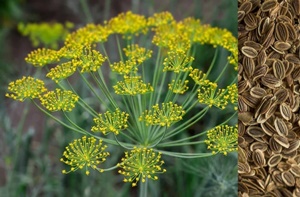

Abstract
Located at the crossroads of the human-Nature sciences, ethno-pharmacology is a discipline that is interested in traditional medicines whose objective is the search for new treatments of tomorrow. In this context, we conducted an ethno-pharmacological survey on the traditional use of aneth (Anethum graveolens L.) in some regions of the North-West of Tunisia to examine Tunisians' knowledge of its use for treatment and disease control. A survey was prepared with two parts, the first deals with the profile of the respondent (age, sex, level of study) and the second was devoted to identification and use of aneth (parts used, diseases treated and methods of preparation and administration, etc.). Collected data revealed that Aneth is used as a therapeutic remedy for treatment of various pathologies, mainly digestive disorders (40.7%). The investigation also revealed the mode of preparation where the respondents use it as food (50.9%) followed by infusion and decoction (24.7% and 23.7%, respectively). The most used part according to them is the leaf (29.2%) while the mode of administration is mainly oral (97.1%). In conclusion, the information obtained from inhabitants of Tabarka, Bou Salem and Nefza regions about this medicinal and aromatic plant is interesting for a possible therapeutic innovation. They could form a database for subsequent pharmacological and experimental evaluations to explore the curative potential of this plant.
Keywords: Ethno-pharmacology, Traditional medicine, Dill, Aneth, Survey, Tunisia