Dwarf short-horned bulls in West Africa: Lagunaire and Muturu breeds
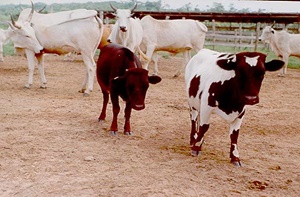

Abstract
This study reviews the knowledge on short-horned dwarf taurines, notably the Lagunaire or Muturu breeds in West Africa in general and in Côte d'Ivoire in particular. This trypanotolerant breed is found along the West African coasts from Liberia to Nigeria, a tsetse-infested areas. The average weight dwarf taurines adults is 200 kg for males and 160 kg for females. The height at the withers is between 80 and 100 cm. The age at first calving is 29.8 months with an inter-calving interval of 13.6 months. The milk production of the Lagunaire breed is low, at 0.36 liters per day. These animals are generally bred for slaughter. The short-horned dwarf bulls are remarkably well adapted to their breeding environments where parasitic diseases proliferate. The Lagunaire breed is considered more trypanosomiasis tolerant than the Ndama breed, as it has better indicators. It is generally reared in the traditional extensive way. The prospects for the development and valorisation of this breed are numerous, although it has not yet been taken into account in the improvement and selection programmes.
Keyswords: Dwarf bulls, Laguna, Muturu, trypanosomiasis, valorisation