Ethno-medical and socio-economic values of Irvingia tenuinucleata in Gbado-Lite, Democratic Republic of Congo

Abstract
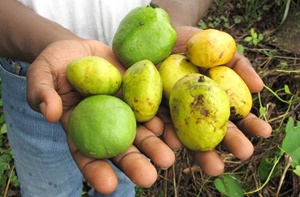
The Democratic Republic of the Congo is one of the reservoirs of plant biodiversity. This biodiversity constitutes a source of income, food and medicine for the population in rural, peri-urban and urban areas. The aim of this study was to identify the ethno-medical uses and the socio-economic value of Irvingia tenuinucleata in Gbado-Lite city with a view to its valorization according to the principle of access and benefit sharing. The results revealed that this plant treats foot swelling, hemorrhoids, intestinal worms and as a traditional uterotonic agent (ICF=0.5). The decoction and the expression are the two modes of preparation the most used. The fruit (92.8%) is the most used part, followed respectively by stems (3.8%), leaves (2.4%) and bark (1%). The sale of I. tenuinucleata fruits is carried out by women (92.2%), single people (52.9%) and people between 36 and 50 years old. The majority of households are composed of 1 to 5 people (62.7%) with a sales experience of 1 to 5 years (72.5%). This NTFP is primarily intended for consumption (80%) and is partially sold (90.2%). This sale generates a monthly income of approximately 2,500 to 5,000 CDF (1 USD= 2,030 CDF) for 68.6% of the respondents. The main difficulty related to the sale is the preservation of the fruit (45.1%). The constraints related to harvesting include the presence of snakes in the forest, inaccessibility, fewer buyers, difficulty in accessing the fruit at the base of the tree, deforestation (the forest is increasingly far from the city), etc. On the other hand, the main activity of the peasant farmers is agriculture (55.8%), which is mostly practiced by men (69.2%), and the pickers are mostly married (69.2%). Annual production represents 2 to 5 basins for 40.4% of respondents. 86.5% of farmers surveyed own at least one field in the forest. 46.2% of farmers visit the forest more than three times a week. Unemployment and poverty are the main causes of pressure on the forest. It is therefore necessary to train them in NTFP management by strengthening their capacity in agro-ecology. To this end, in-depth scientific research should be carried out to gain a better understanding of the ecology, phytochemistry, pharmaco-biological, toxicological and nutritional properties of this plant species and its domestication in North Ubangi.
Keywords: Medicinal plants, wild edible fruits, non-timber forest products, access and benefit sharing, agro-ecology, agroforestry, Irvingia tenuinucleata