Microdose, a fertilization technology for sustainable land management and improved vegetable yields in the groundnut basin of Senegal

Abstract
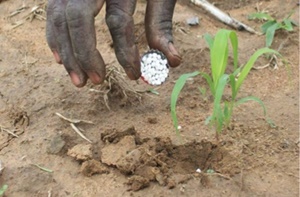
The low availability of nutrients is a major limiting factor for agricultural production in the agrosystems of the Groundnut Basin (GB) of Senegal. Initiatives have been taken to raise the level of soil fertility and, in turn, crop yields in these agrosystems. Among other initiatives, there is the microdose technology used on dry cereals and vegetables to optimize the use of fertilizers and boost yields. The objective of this study is to analyze the agro-economic performance of microdose (MD) on vegetable production. The study was conducted during the 2020-2021 off-season on 2,297 plots of 100 to 200 m2 per plot in 96 districts located in the GB. 60 ha were planted: 12 ha of pepper, 22 ha of tomato, 12 ha of okra and 14 ha of eggplant. Each plot was divided into two parts of equal area: one treatment representing the farmer's practice (FP) and another the microdose (MD). The yield, cost and value of production were evaluated for each treatment. The study showed good performance of the MD technology on vegetable crops with fertilizer savings, yield and gross margin advantages over farmer practice. A second cropping season is necessary to be able to appreciate the results of this first campaign, to draw conclusions and to make recommendations.
Keywords: Groundnut Basin, microdose, vegetable crops