Inventory and characterization of fungi associated with citrus decline in Burkina Faso

Abstract
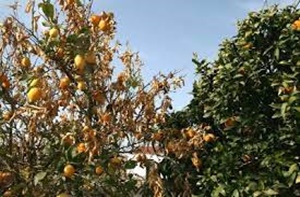
In Burkina Faso, decline is one of the production constraints of citrus. This study makes the diagnosis of the disease in the major production areas. Thus, the incidence and severity were assessed in Kénédougou and Comoé. An inventory of fungal species was made from diseased organs. A morphological and pathogenic characterization was carried out from ten (10) isolates of the dominant species. The average incidence of the disease varies between 85.0 and 94.7% in the two provinces. The highest severity index was recorded in the Toumousseni site (92.8%) and the lowest in the Kartasso site (33.6%). Six (06) fungal species (Colletotrichum sp, Lasiodiplodia sp, Fusarium sp, Pestalotiopsis sp, Aspergillus sp and Botrytis sp) were inventoried. Ten strains of Colletotrichum sp presented morphological characteristics almost similar to the species Colletotrichum gloeosporioides. Then, in vitro inoculations on leaves and in vivo on plants revealed variability in pathogenicity. Thus, KciCo9, CciCo4, KciCo15 were the most aggressive in vivo. The lesions induced were significantly different between the strains. In view of the importance of the disease, a molecular characterization of the species is necessary.
Keywords: Decline, Citrus, Fungi, Colletotrichum, Burkina Faso