Biological and ecological diagnosis for reintroduction and sustainable management of Saharan antelope populations at the M’cissi Site of Biological and Ecological Interest (Tinghir Province, Morocco)

Abstract
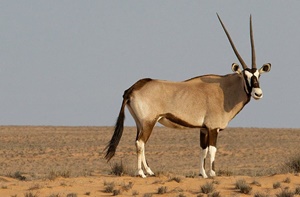
Created in 2006, the M'cissi Animal Reserve is dedicated to the reintroduction of the Scimitar oryx, Dama Gazelle and Dorcas Gazelle. The current study aims to analyze the ecological feasibility of releasing Scimitar oryx into the M'cissi Site of Biological and Ecological Interest (SIBE) and its surroundings. An ecological assessment was conducted to evaluate the environmental potential for releasing antelope populations, along with an evaluation within the reserve (3 728 hectares) to understand the interactions between vegetation cover and antelope populations. Using a random stratified design of 100 plots (with a 10-meter radius), the evaluation of pastoral resources and the estimation of carrying capacity in the SIBE and the animal reserve were carried out through a combined method. The antelope populations in the reserve were surveyed using transect methods and characterized based on age structure, sex ratio, and spatial distribution. A systematic layout of 58 plots was established within the reserve to assess antelope interactions with vegetation cover. Out of the 36 plots, the study of the impact of animals on Acacia raddiana trees revealed pressure in the form of rubbing, with an average degree of damage at 14.2 %. The results confirm the ecological feasibility of a potential release due to suitable hosting capacities. Eight vegetation types were identified, producing a phytomass per type ranging from 32,144 kg to 820,698 kg dry matter. The total forage production determined for the SIBE and the animal reserve, including herbaceous and shrub layers, amounts to approximately 2,164,202 kg dry matter. The reserve can accommodate 279 Scimitar oryx or 760 Dama gazelles or 1584 Dorcas gazelles or 540 ostriches. Based on the findings of this assessment, a draft management and development plan for the animal reserve has been proposed.
Keywords: Reintroduction, Ecological feasibility, Scimitar oryx, SIBE, Management plan