Phytoremediation potential of water hyacinth (Eichhornia crassipes) for wastewater purification in Togo

Abstract
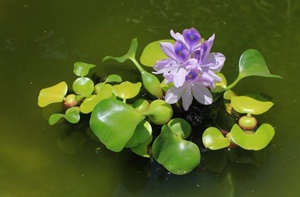
Phytoremediation is the process of using plants through extraction, stabilization, degradation and volatilization to clean up soil, water and air contaminated by toxic substances, pollutants or heavy metals. Phytoremediation plants remain to this day an efficient way to decontaminate water, soil and air. The general objective of this work is to contribute to water purification through phytoremediation plants. We studied the phytoremediation potential of Eichhornia crassipes (Mart.) (Solms-Laub) recognized as the most pollutant-accumulating species in the study area, in an experimental design in discontinuous mode. This preliminary work consisted of a literature review on phytoremediation species and an experimental study of the kinetics of phytoremediation of water hyacinth. The physico-chemical parameters considered are pH, conductivity, orthophosphate, nitrates, Biological Oxygen Demand (BOD), and Chemical Oxygen Demand. The pH, orthophosphate, BOD, and COD values decreased by 3.20%; 68%; 97% and 85%, respectively, on day 24, but the nitrate concentration increased from 0.8 mgNO3-/l to 65.5 mgNO3-/l. This increase in nitrate is due to nitrification of ammonium nitrogen to nitrite.
Keywords: Phytoremediation plants, sanitation, Eichhornia crassipes, kinetics, wastewater