Ethnobotanical, phytochemical, and pharmaco-biological study of plants used in traditional medicine for the management of Sickle Cell Disease in Kinshasa, DR Congo

Abstract
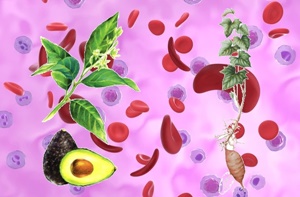
The aim of this study was to identify medicinal plants used by parents of individuals with sickle cell disease for disease management and to assess the anti-sickling and anti-inflammatory activity of the most mentioned plants (Ipomoea batatas and Persea americana). A survey using snowball sampling technique was conducted with 30 parents (25 to 89 years of age). Ethnobotanical investigation led to the identification of 30 plant species of 30 genera and 25 botanical families. The most represented families were Fabaceae, Acanthaceae and Buseraceae. The documented flora consisted of five main life forms, including trees, shrubs, sub-shrubs, vines and perennial herbs. Trees (10 species) and shrubs (9 species) were dominant, followed by perennial herbs (7 species), vines (3 species) and sub-shrubs (1 species). Phytochemical analyses showed that Ipomoea batatas leaves contain saponins, polyphenols, anthocyanins, flavonoids, linked quinones, leucoanthocyanins, tannins, alkaloids and steroids. On the other hand, Persea americana leaves contain saponins, anthocyanins, flavonoids, linked quinones, leucoanthocyanins, tannins and steroids. Hydro-alcoholic extracts of both plants exhibited in vitro anti-sickling activity. At a dose of 89.3 µg/mL, these extracts were more active than Diclofenac sodium (39.7%). Additionally, the aqueous extract was more active than the organic extract. Persea americana (84.3% vs 78.0%) was more active in aqueous medium, while Ipomoea batatas (58.3% vs 52.0%) was more active in organic medium. The leaves of I. batatas exhibited in vitro anti-sickling properties. The minimum normalizing concentration (MNC), which is the lowest concentration at which the normalization rate is maximal, was found to be 30 µg/mL.
Keywords: Sickle Cell Disease, Inflammation, Traditional Medicine, Ipomoea batatas, Persea americana