Socio-economic importance of non-timber forest products in the savanna region of Togo

Abstract
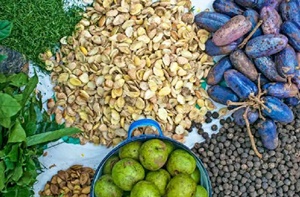
This study focuses on the socio-economic importance of Non-Timber Forest Products (NFTP) in the savannah region of Togo. A total of 56 species were identified, consisting of 52 genera and 29 families. The Leguminosae-Mimosoideae family, with 8 species, was the most represented. All the listed species are important to local households. In terms of use, 36% of the species are used for food, 32% for commercial purposes and 22% for medicinal purposes. The species with the highest importance value indices are Vitellaria paradoxa, Parkia biglobosa, Vitex doniana and Borassus aethiopum. For the selected products, the main stakeholders are producers or collectors, raw material traders, processors and consumers. Apart from the various uses of NTFPs, they also constitute a source of household income. In the case of V. paradoxa, P. biglobosa and T. indica, nuts, seeds and fruits were the most widely traded organs, either raw or processed. Revenue from these products is used to improve the living conditions of rural populations. NTFPs are produced in rural areas and sold in urban centers, the main one being the large market in Dapaong.
Keywords: Non-timber forest products, value chain, socio-economic, savannah, Togo