Does quarrying contributes to biodiversity conservation in Northern Benin ?

Abstract
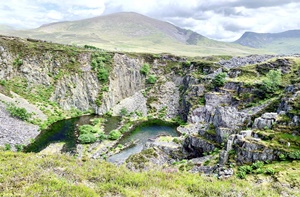
The study aimed to investigate the hypothesis that abandoned quarries could enhance local floristic diversity, contrasting with the prevailing observation that quarry exploitation has negative impacts on biodiversity. A floristic inventory was conducted within thirty (30 m x 30 m) square plots, with sixteen (16) established in the vegetation of abandoned quarries and fourteen (14) in the adjacent natural vegetation (reference sites). Various diversity indices (including species richness, Chao1, Chao2, Jack1, Jack2, Shannon index and Pielou evenness index) were computed and compared between the two types of ecosystems. We found no significant difference in diversity indices between quarries vegetation and the reference sites. However, the floristic richness of the reference sites exhibited a higher count (62 species) compared to that of the quarries (55 species). A substantial floristic similarity (ranging from 50% to 90%) was observed between the two ecosystems. Both ecosystems were predominantly characterized by the Fabaceae family, which represented 39.3% of the vegetation in quarries and 40.8% in the reference sites. We concluded that the vegetation of abandoned quarries did not affect the existing local diversity as expected. This is probably due to the limited niche differentiation after excavation which requires further investigation.
Keywords: Post-harvesting carries, Excavation, Biodiversity, Benin