Ethno-zoology of the white-faced whistling Duck (Dendrocygna viduata) in the Niger River valley

Abstract
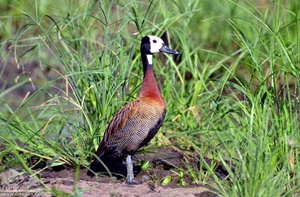
The purpose of the present study, carried out in the Kandadji dam area, is to characterize the different biological and ecological aspects of the species Dendrocygna viduata in the Niger River valley in order to contribute to the preservation of this animal species. Data collection was based on literature search and ethno-zoological surveys with 311 people through individual interviews, from September 15 to October 31, 2018. The white-faced whistling Duck is a small duck (38-48 cm) with the balanced silhouette, always high on its legs and mainly seen in wet and grassland areas. This species is seen in the morning by 57.2% of the population and in the evening by 40.2%. The white-faced whistling Duck was seen a day ago by 64.6% of the population and a week by 28.9%. The species is found all seasons of the year in colonies of around 20 individuals each. The study showed that drought is the main natural threat (85.2%) to the species. Hunting and habitat destruction constitute anthropogenic threats respectively with 61.7% and 16.4% according to the survey. The white-faced whistling Duck feeds on insects (35.4%), fish (42.1%) and seeds (19.3%). The eggs of Dendrocygna viduata are white (96.9%) and small (83.6%). This species lays more than two eggs (98.4%) in fallows (64.3%). The egg hatching time is one month (83.9%) according to the survey. The white-faced whistling Duck is among the most abundant species in Niger.
Keywords: Ethno-zoology, Dendrocygna viduata, Kandadji Dam, diet