Tourism, an alternative for the sustainability of oasis ecosystems in Morocco

Abstract
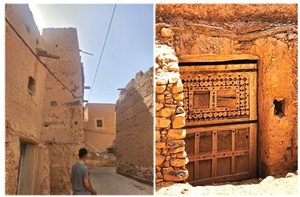
Oases are manmade agro-ecosystems which have allowed local populations to survive in particularly harsh climatic conditions. This is largely due to water management and social solidarity. Unfortunately, these agrosystems are losing their attractiveness among young people, who prefer to migrate to large cities in search of better opportunities. Nevertheless, over the centuries, oasis ecosystems have demonstrated their capacity for resilience whatever the environmental constraints, thanks to the development of judicious adaptation mechanisms. Alternative solutions are necessary to restore and revitalize these agro-ecosystems and make them more attractive to younger generations. Tourism can be an alternative to achieve this objective. In this article, we present ideas for the development of programs and strategies to promote and encourage oasis tourism focusing on the case of Fam Al Hisn. This will help generate employment and keep in place the young population, the main guarantor of sustainability. Fam Al Hisn is a small oasis located in the heart of the Sahara with cultural heritage and several landscape assets. Historically, it constituted a stopover at the crossroads of the trans-Saharan caravan routes, putting the ancient inhabitants in contact with different ethnic groups and allowing them to acquire expertise in trade. In addition, the presence of rock carvings testifies to the antiquity and human presence during wetter climates. Fam Al Hisn oasis is located at the foot of Jbel Bani, on the banks of Wadi Tamanarte. The water that supplies it is captured in the bed of this wadi thanks to almost 3 km long khettaras which become open-air channels at the entrance to the oasis. Careful water management allows the cultivation of several species such as dates, fruits and vegetables which have, in the past, led to certain prosperity in this difficult environment. The crop plots are jealously protected by walls built from local materials. They are accessible through a maze of lanes and paths of labyrinthine complexity. However, like other oases in Morocco, Fam Al Hisn faces constraints of different kinds. The climate, initially unfavorable, is exacerbated by climate change. Water scarcity is aggravated by the drop in the water table level and the lack of maintenance of the canals. The fragility of the soil and the lack of plots maintenance lead to the degradation of the palm grove (fungal diseases, drying out, aging, etc.). The fragmentation of agricultural plots and the subdivision of water rights often result in the abandonment of agricultural activity by young people who prefer to emigrate. It is therefore of crucial importance to consider innovative and sustainable solutions to retain them in their environment.
Keywords: Oasis, climate change, culture, tourism, sustainability, Fam Al Hisn