Surveys of olive microbial diseases in Tadla Azilal region

Abstract
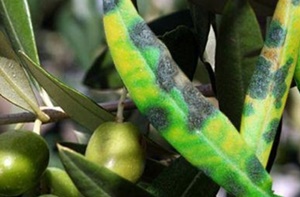
The present study aims to locate possible foci of infections of fungal and bacterial origins in the olive grove of Tadla-Azilal region and to estimate the rates of infestation based on a symptomatological diagnosis. Surveys carried out in 11 municipalities and villages (February-April 2017), allowed us to identify the presence of three diseases of microbial origin, two of which are of fungal origin, namely verticillium wilt, and olive scab (Peacock’s eye) and one of bacterial origin, olive knot disease. The importance of scab in the region is 91.3%. The orchards of Beni Mellal, Tagzirt, Mghila and Sidi Jabber are the most affected by this disease. As for verticillium wilt, one of the most serious diseases of the olive tree, it represents 65.2% in the region, particularly in the orchards of Fquih Ben Salah (75%) which are the most affected, followed by Beni Mellal and Azilal with 66.7% and 55.6%, respectively. The importance of bacteriosis in olive groves is around 13.0%. 2 out of 6 (33.3%) villages and the visited municipalities of Beni Mellal region are touched by the disease. In the Azilal region, no sign of this disease is encountered. The assessment of the knowledge of 103 farmers in the region regarding olive diseases and control methods reveal that 82.8% have knowledge about the presence of pests and microbial diseases, including the peacock’s eye, psyllid, verticillium wilt which are the most mentioned. However, only 48.5% of these farmers declare the adoption of a treatment against these phytopathologies.
Keywords: Olive diseases, fungi, bacteria, Tadla-Azilal region