Study of the woody flora in the mining areas of the commune of Sabodala (Kédougou, Senegal)

Abstract
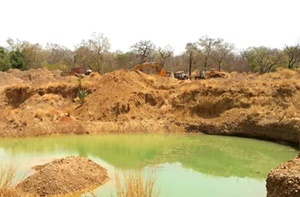
Eastern Senegal is a very rich region for its flora and fauna but also for its subsoil which contains interesting gold, uranium, iron, copper, copper, nickel, lithium, marble, molybdenum and chromium deposits. However, this exploitation is not without consequences, as mining activities cause enormous damage, particularly to the environment. The objective of this study is to establish the reference situation of the woody flora of the area. Thus, using stratified random sampling and a systematic grid, the study of the site's flora was carried out using the mobile inventory method. The flora of the mining area of the commune of Sabodala and its surroundings is rich in 103 species distributed in 75 genera and 32 families. The Fabaceae, Combretaceae and Malvaceae are the majority families of this flora. The Combretum genus is the richest with 7 species. The biological spectrum shows a predominance of microphanerophytes and mesophanerophytes. The species of the Sudanian base element are the majority with 35.3%, indicating the Sudanian character of the area. These results are very important in the processes of reconstitution of the flora of the zone.
Keywords: woody flora, Goumbati-Kobokoto, savannas, Sudanian zone